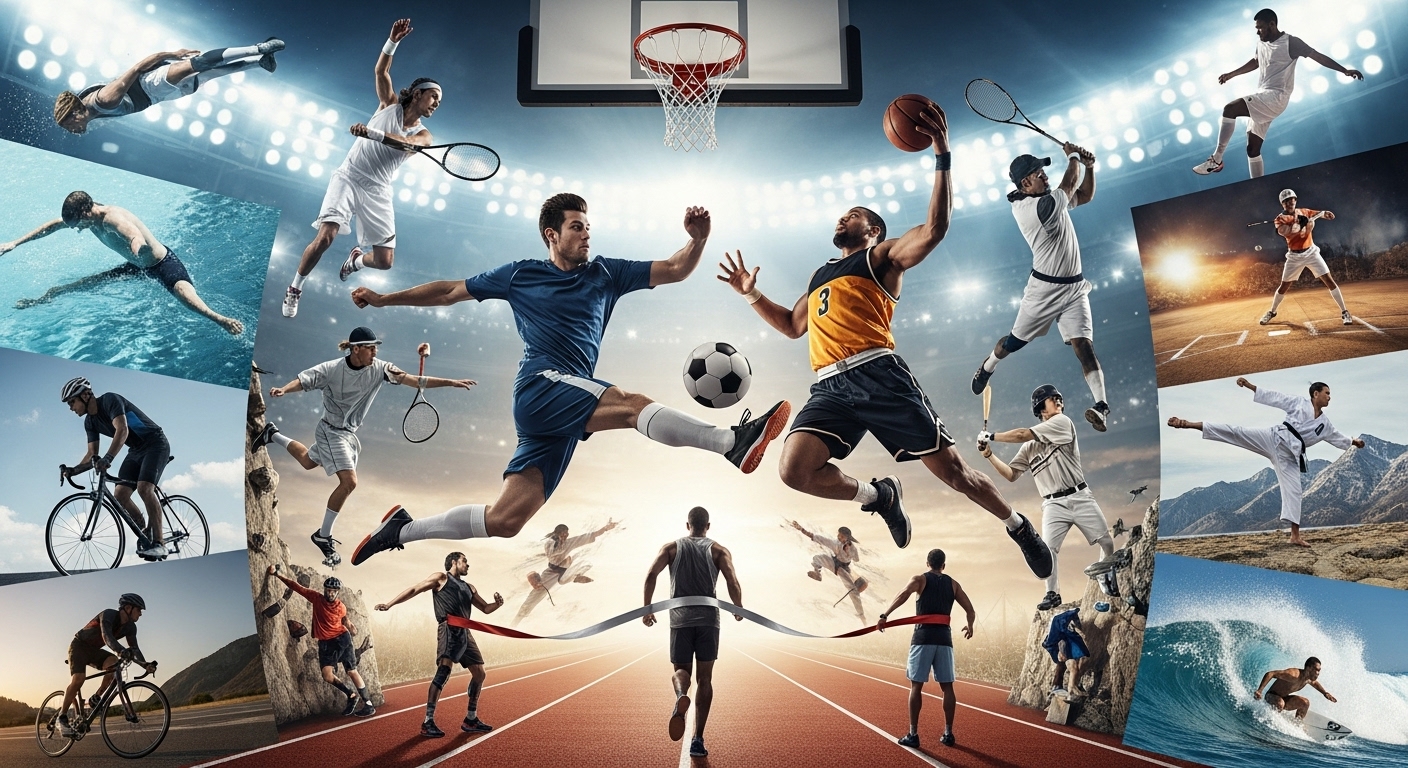

Introduction: The Universal Language of Sports
Sports have always been more than just games. They are a universal language that transcends borders, cultures, and generations. From the roar of the crowd in a packed stadium to the quiet determination of an athlete training before dawn, sports capture the essence of human potential. They inspire, unite, and remind us that victory is not only measured in medals but also in courage, discipline, and resilience.
In every corner of the world, people participate in sports to challenge their bodies, sharpen their minds, and build their character. Whether it’s a child kicking a ball in a village field or a world-class athlete chasing Olympic glory, the spirit remains the same — the pursuit of excellence through effort.
This blog explores the vast world of sports, their historical roots, psychological impact, cultural significance, technological evolution, and their role in shaping the future of society.
The Ancient Origins of Sports
Sports have existed since the earliest days of civilization. Ancient paintings, sculptures, and artifacts reveal that physical competition was an essential part of human life thousands of years ago. In ancient Egypt, games like wrestling, archery, and javelin throwing were popular among both soldiers and common people. The Greeks introduced organized athletic competitions such as the Olympic Games, which began in 776 BC and celebrated physical excellence and honor to the gods.
The Romans later embraced sports as both entertainment and training for war. Gladiator battles in grand arenas demonstrated physical strength, endurance, and bravery, though often at a brutal cost. Across other ancient cultures — from the Mayans playing ball games to the Chinese practicing martial arts — sports served as a reflection of social structure, spirituality, and communal pride.
These ancient traditions laid the foundation for modern sports, proving that the desire to compete and showcase skill is deeply rooted in human nature.
The Evolution of Modern Sports
As societies evolved, so did sports. The Industrial Revolution in the 18th and 19th centuries brought urbanization and more structured leisure time, leading to the formal organization of sports clubs, associations, and international competitions. Rules were standardized, uniforms introduced, and sporting ethics defined.
England became a major influence in shaping modern sports such as football, cricket, and rugby. The codification of these games allowed them to spread across continents, particularly through colonization and global trade. By the 20th century, sports had become an essential part of education systems, with schools and universities promoting athletics as a way to develop teamwork and discipline.
The revival of the Olympic Games in 1896 symbolized the global recognition of sports as a tool for peace and unity. The modern Olympics brought together athletes from different nations to compete fairly and celebrate diversity through physical achievement. Over the decades, the Olympics expanded to include women, professionals, and athletes from nearly every nation, showcasing both athletic excellence and human equality.
The Psychological and Emotional Impact of Sports
Sports are not only physical; they are deeply psychological. Athletes must master their minds as much as their muscles. The pressure of competition, the pain of defeat, and the euphoria of victory create an emotional rollercoaster that shapes personalities.
Sports psychology teaches that mental toughness — the ability to stay calm, focused, and resilient under pressure — often separates good athletes from great ones. Visualization, self-talk, and goal-setting are common tools used to build confidence and manage stress.
For spectators, sports also have a powerful emotional impact. Fans form deep attachments to teams and players, finding identity and belonging through shared passion. Victories can unite entire nations, as seen during World Cup celebrations or Olympic triumphs. Losses, on the other hand, can break hearts but also teach humility and perseverance.
Sports, in essence, mirror life itself: moments of glory, times of struggle, lessons in teamwork, and the endless pursuit of self-improvement.
The Role of Sports in Education and Youth Development
Sports play a vital role in shaping young minds and bodies. Participation in sports from an early age teaches children important values such as teamwork, discipline, respect, and responsibility. It helps them understand that success comes through hard work and that failure is a part of growth.
In schools, sports are not only about physical fitness but also about mental and social development. Students who engage in athletics tend to perform better academically, manage stress more effectively, and develop leadership skills that serve them throughout life.
Moreover, sports can provide opportunities for social mobility. Many athletes from disadvantaged backgrounds have risen to global fame and success through talent and determination. Sports scholarships, youth academies, and community programs give children a path to a brighter future, both on and off the field.
The Globalization of Sports
The 20th and 21st centuries witnessed the globalization of sports like never before. The invention of television brought live matches into homes, turning local games into global spectacles. Later, the rise of the internet and social media amplified this connection, allowing fans to follow their favorite teams and athletes in real time, no matter where they lived.
Major sporting events such as the FIFA World Cup, the Olympics, the NBA Finals, and the Super Bowl now attract billions of viewers. Sports have become a form of soft power — a way for nations to showcase culture, talent, and unity on the world stage.
Globalization has also led to greater diversity in sports participation. Athletes now train and compete internationally, crossing cultural and national boundaries. This exchange has enriched sportsmanship and encouraged inclusivity. However, it has also introduced challenges such as commercialization, exploitation of talent, and political influence in sporting organizations.
Women in Sports: Breaking Barriers and Inspiring Generations
For centuries, sports were considered a male domain. Women’s participation was limited or outright banned in many parts of the world. However, the past century has seen a revolutionary shift.
Trailblazing athletes like Billie Jean King, Serena Williams, Simone Biles, and Megan Rapinoe have proven that gender has no bearing on greatness. Their achievements have inspired millions and reshaped societal attitudes toward women in sports.
The inclusion of women in the Olympics and professional leagues has opened doors for equality, representation, and empowerment. Female athletes today are breaking world records, commanding global sponsorships, and using their platforms to advocate for social justice and gender equity.
The journey toward equality in sports is still ongoing, but every victory by a woman athlete pushes the boundary further and strengthens the message that talent and determination know no gender.
Sports and Technology: A New Era of Performance and Entertainment
Technology has revolutionized every aspect of sports — from training and performance analysis to broadcasting and fan engagement. Advanced data analytics, wearable devices, and artificial intelligence now help athletes optimize their performance and prevent injuries.
Video analysis software allows coaches to break down every movement, while GPS tracking and heart rate monitors provide real-time data during practice and competition. Virtual reality is being used for simulation training, giving athletes the chance to rehearse mentally and tactically.
For fans, technology has transformed the experience of watching sports. High-definition broadcasts, instant replays, virtual stadium tours, and online streaming have made sports more accessible and immersive. Social media platforms give fans direct interaction with their favorite athletes, creating a closer connection between stars and supporters.
Esports — competitive video gaming — has also emerged as a major phenomenon, blurring the lines between traditional and digital sports. With millions of fans worldwide and professional players earning significant incomes, esports has become a symbol of how technology is expanding the very definition of athletic competition.
Sports as a Tool for Social Change
Throughout history, sports have played a crucial role in promoting social change and justice. Athletes have often used their platforms to speak out against inequality, racism, and injustice.
The raised fists of Tommie Smith and John Carlos at the 1968 Olympics became an enduring image of protest against racial discrimination. Muhammad Ali’s refusal to fight in the Vietnam War highlighted the moral conscience of an athlete. More recently, movements like taking a knee in football or campaigns for inclusion in various leagues show that sports remain a powerful space for advocacy.
Sports bring people together across divides of race, religion, and class. They provide a stage where cooperation, respect, and fair play can transcend prejudice. When athletes unite for a cause, their influence can ignite conversations and inspire real-world change.
The Business of Sports
Sports today are not only about competition but also a massive global industry worth billions of dollars. From sponsorships and broadcasting rights to merchandising and ticket sales, the sports economy drives employment and innovation across multiple sectors.
Athletes have become global brands, endorsed by companies and idolized by fans. Teams and leagues compete not only on the field but also in marketing and fan engagement. Stadiums are now architectural marvels equipped with luxury boxes, interactive screens, and digital amenities.
However, commercialization has its downsides. The growing influence of money sometimes overshadows sportsmanship, and corruption scandals in major organizations have raised ethical concerns. Balancing profit with integrity remains one of the biggest challenges in modern sports.
Despite these issues, the business of sports continues to evolve, driven by the passion of fans and the universal appeal of competition.
The Health and Fitness Revolution
In the modern era, sports have become synonymous with health and wellness. With increasing awareness of fitness, more people are engaging in sports not for competition but for lifestyle improvement. Running, cycling, swimming, yoga, and recreational team sports have gained massive popularity as people recognize the physical and mental benefits of regular activity.
Sports help prevent lifestyle diseases such as obesity, diabetes, and heart conditions. They also improve mental well-being by reducing stress, anxiety, and depression. The discipline and routine associated with sports encourage a healthier lifestyle, promoting better sleep, nutrition, and mindfulness.
Governments and organizations around the world are investing in public sports infrastructure, fitness campaigns, and community programs to promote active living. This global movement highlights that sports are not just for athletes — they are for everyone.
The Future of Sports: Innovation, Inclusion, and Sustainability
As we look ahead, sports continue to evolve in exciting ways. Emerging technologies like artificial intelligence, virtual reality, and biomechanics are pushing performance boundaries. Sustainable sports practices are gaining importance, with organizations focusing on eco-friendly stadiums, reduced carbon footprints, and recycling initiatives during major events.
Inclusivity is also shaping the future of sports. Para-athletes and Special Olympics participants are receiving greater recognition and respect for their extraordinary achievements. Adaptive technologies and inclusive policies are ensuring that people of all abilities can participate and compete.
The rise of mixed-gender events, eco-conscious tournaments, and digital engagement platforms signal a future where sports will be more accessible, equitable, and environmentally responsible than ever before.
Conclusion: The Eternal Spirit of Sports
Sports, in their purest form, are a celebration of the human spirit. They embody struggle and triumph, solitude and solidarity, effort and excellence. Whether played in a small neighborhood park or a massive international arena, sports remind us of what it means to push beyond limits and to believe in something greater than ourselves.
In a world often divided by differences, sports stand as a rare unifying force. They teach us respect, humility, and perseverance. They remind us that success is not guaranteed, but the journey toward it is what defines our character.
From the ancient Olympic stadiums of Greece to the futuristic arenas of today, the essence of sports remains unchanged — the timeless pursuit of greatness, the joy of competition, and the bond that connects humanity through motion, emotion, and passion.