Introduction: The Universal Language of Sports
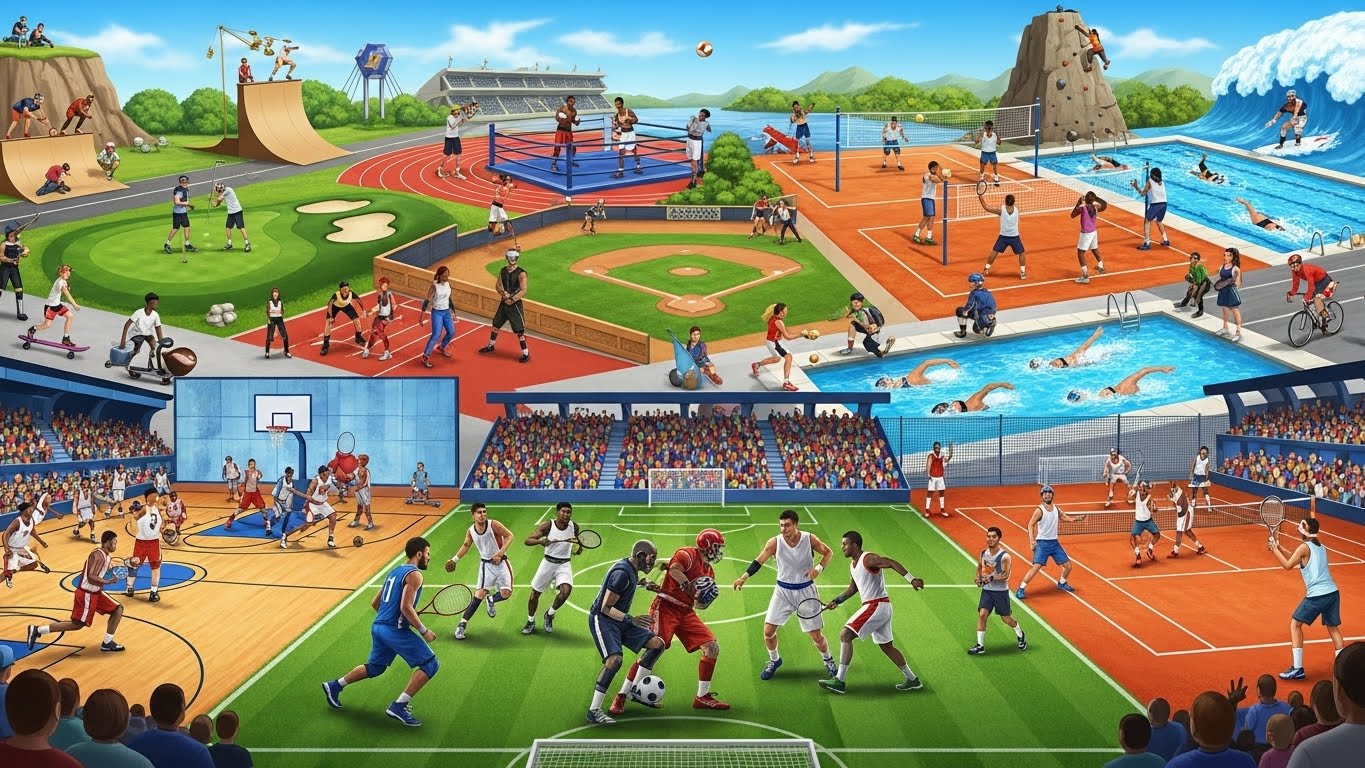
Sports have an unparalleled ability to unite people across cultures, backgrounds, and nationalities. Whether it’s the roar of a stadium crowd, the intensity of a nail-biting finish, or the simple joy of playing a game with friends, sports offer a unique form of entertainment and personal fulfillment. From ancient gladiatorial games to modern-day international competitions, the world of sports has evolved dramatically, but its core essence remains unchanged—competition, passion, and a sense of community.
In this blog, we will explore the significance of sports in society, trace their evolution, and highlight the factors that have contributed to their global popularity. We will also delve into the economic, cultural, and social impact of sports, as well as the future of athletics in a rapidly changing world.
The Origins of Sports: A Glimpse into Ancient Times
Early Beginnings
The history of sports can be traced back to the earliest civilizations, where physical contests were an important part of cultural and religious practices. In ancient Egypt, for example, there are records of games that resembled modern-day field hockey, while the Sumerians and Babylonians engaged in various athletic activities, including racing and wrestling.
However, it was in Ancient Greece that sports began to take on a more organized and formal structure. The ancient Olympic Games, first held in 776 BCE, became the pinnacle of athletic competition. These games were not only a showcase of physical prowess but also a means of honoring the gods, particularly Zeus. Athletes competed in events such as running, boxing, and chariot racing, and the winners were celebrated as heroes, often receiving prestigious rewards like olive wreaths and statues in their honor.
Ancient Rome also had a deep-rooted tradition of sports, particularly in the form of gladiatorial combat. While these contests were often brutal and deadly, they played an important role in the Roman entertainment system and served as a display of power and dominance. Other popular Roman sports included chariot racing, ball games, and wrestling, which were enjoyed by both the elite and the general populace.
The Growth of Sports: From Medieval Times to the Modern Era
The Renaissance and the Birth of Modern Sports
While the fall of the Roman Empire led to a decline in formalized sports, physical activities remained part of life throughout the Middle Ages. Knights engaged in jousting tournaments, and archery contests were popular in England and France. However, it wasn’t until the Renaissance that the modern conception of sports began to take shape. As European societies became more focused on humanism and the celebration of the body, the concept of organized physical activity began to take hold.
The first modern sports, such as soccer (football), rugby, and cricket, began to emerge during the 19th century in Great Britain. With the development of rules, standardized competitions, and leagues, these early sports gained structure and began to spread globally. The industrial revolution, with its advancements in transportation and communication, allowed for greater interaction between different nations and cultures, further promoting the growth of sports.
The Birth of International Competitions
The 20th century saw the emergence of international sports competitions that brought athletes from around the world together. The Olympic Games, which had been revived in 1896, quickly became the most prestigious event in the sporting world, with nations competing not only for medals but also for global prestige. Other international competitions, such as the FIFA World Cup (for soccer) and the ICC Cricket World Cup, were also established, and these events attracted millions of viewers from every corner of the globe.
These international events are more than just competitions; they are cultural phenomena. The Olympic Games, for instance, showcase the diversity of the world’s athletes and bring attention to issues of global unity, peace, and cooperation. Similarly, events like the FIFA World Cup offer a platform for national pride and showcase the power of sport to transcend political and cultural barriers.
The Global Popularity of Sports
A Shared Passion: Why People Love Sports
One of the reasons sports resonate so deeply with people is their ability to evoke strong emotional responses. Whether it’s the thrill of a last-minute goal or the tension of a tied game heading into overtime, sports stir emotions in a way that few other forms of entertainment can. The unpredictability of a match, the clash of wills between athletes, and the collective energy of fans create an atmosphere of excitement and tension that is unmatched in other domains.
Sports also provide a sense of identity and belonging. Fans often form deep emotional connections with their favorite teams, athletes, and even countries. Whether it’s through supporting a local team or rooting for a national squad in international competitions, sports give people something to unite around. The shared experience of celebrating a victory or mourning a loss creates a sense of camaraderie among fans that transcends geographical and cultural differences.
Moreover, sports offer an escape from the stresses of daily life. In times of uncertainty, people turn to sports for comfort, entertainment, and distraction. Major sporting events, like the World Cup or the Super Bowl, become moments of collective celebration, where people can temporarily forget their worries and immerse themselves in the joy of competition.
The Dominance of Major Sports
While nearly every country has its own unique sporting traditions, certain sports have achieved global dominance. Football (soccer) is the most popular sport in the world, with an estimated 4 billion fans across the globe. The sport’s simple rules, global reach, and the passion of its supporters make it a universal language of sport. Major leagues like the English Premier League, La Liga, and Serie A attract millions of viewers, while international events like the FIFA World Cup bring together billions of fans from all over the world.
Other popular sports include basketball, cricket, rugby, and tennis, all of which have large, devoted followings. Basketball, with its iconic NBA, has become a global sport, with players like Michael Jordan and LeBron James achieving international fame. Cricket is particularly popular in countries like India, Pakistan, and Australia, where it is deeply ingrained in the culture. Rugby, while not as widely played as soccer, has a passionate fanbase, especially in countries like New Zealand, South Africa, and England. Tennis, with its prestigious Grand Slam tournaments, has a dedicated following around the world, with players like Roger Federer, Rafael Nadal, and Serena Williams transcending the sport itself to become global icons.
The Economic Impact of Sports
The Business of Sports
Sports are not just a form of entertainment; they are big business. From television broadcasting rights to sponsorship deals, the financial side of sports is vast and complex. Professional leagues and tournaments generate billions of dollars in revenue each year, and the sports industry as a whole is worth hundreds of billions globally.
In the United States, sports leagues like the National Football League (NFL), Major League Baseball (MLB), and the National Basketball Association (NBA) are worth billions of dollars. Broadcasting deals, where networks pay enormous sums for the right to air games, are a major source of revenue for teams and organizations. Similarly, sponsorships from major brands like Nike, Adidas, and Coca-Cola help fund teams, events, and athletes.
The economic impact of sports extends beyond just the big leagues. Local communities benefit from the presence of sports teams, as professional sports events can bring millions of dollars into the local economy through ticket sales, tourism, and merchandise. Cities often invest in building state-of-the-art stadiums and arenas to attract major sporting events, which in turn helps generate jobs and boost local businesses.
The Role of Sports in Social Change
Sports also have a powerful impact on society. Through high-profile athletes and sporting events, important social issues have been brought to the forefront. From Jackie Robinson breaking the color barrier in Major League Baseball to Colin Kaepernick using his platform to protest racial inequality, athletes have often been at the vanguard of social change. The global reach of sports allows them to serve as a megaphone for issues such as civil rights, gender equality, and environmental sustainability.
Sports can also serve as a unifying force during times of crisis. The 1995 Rugby World Cup in South Africa, for example, helped bring the country together in the aftermath of apartheid. In 2012, the London Olympics showcased the power of sports to bridge divides between cultures and promote peace and understanding.
The Future of Sports: Trends and Innovations
Technology and Sports
As technology continues to advance, the sports industry is undergoing significant transformation. From advancements in performance analytics to virtual reality training tools, technology is reshaping the way athletes train and compete. Wearable devices and sensors allow coaches and players to monitor everything from heart rate to movement patterns, providing real-time data that can be used to enhance performance.
In addition, the rise of esports—competitive video gaming—has introduced a new frontier for sports enthusiasts. Esports tournaments, such as those for games like League of Legends and Fortnite, attract millions of viewers worldwide and offer players the chance to compete for large cash prizes. The inclusion of esports in the Olympics is being discussed, signaling its growing legitimacy as a form of competition.
The Growing Popularity of Women’s Sports
Another key trend in the future of sports is the increasing visibility and recognition of women’s athletics. Women’s sports, including soccer, basketball, tennis, and athletics, are seeing growing audiences and higher levels of investment. High-profile athletes like Serena Williams, Megan Rapinoe, and Simone Biles are not only excelling in their respective sports but also advocating for greater gender equality in athletics.
The success of women’s sports leagues, such as the National Women’s Soccer League (NWSL) in the U.S. and the Women’s Super League (WSL) in England, is a positive sign of the changing landscape. As female athletes continue to break barriers and inspire the next generation, the future of women’s sports looks bright.