
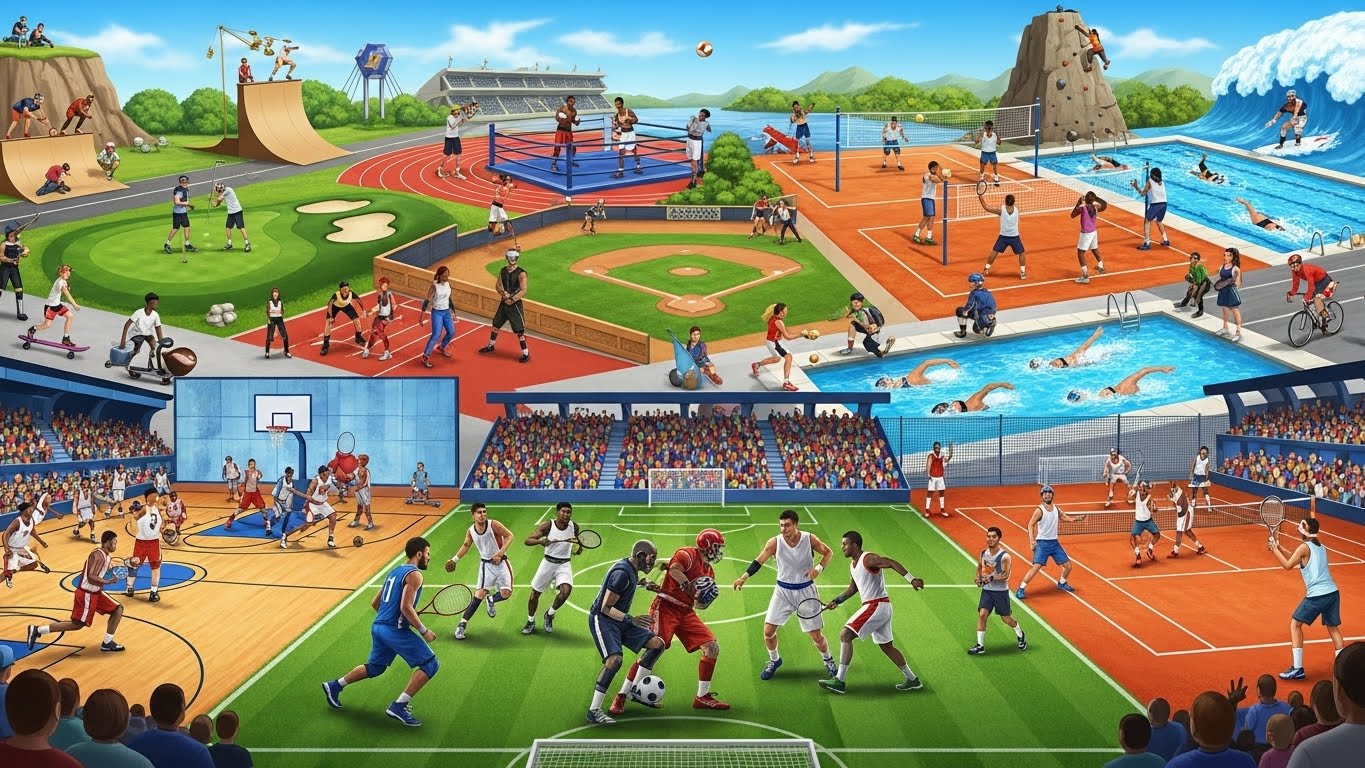
Introduction: The Universal Language of Sports
Sports have always been a fundamental part of human society. From ancient civilizations to modern-day global competitions, sports transcend borders, cultures, and languages. They entertain, inspire, and teach important life skills. Sports are more than games; they are a way of expressing creativity, discipline, and human potential.
Whether it is a casual neighborhood match or a professional international event, sports bring people together. They foster camaraderie, teamwork, and competition, providing a platform where individuals can test their abilities and challenge themselves. Across history and geography, sports have proven to be a universal language that connects people on a fundamental level.
The Historical Evolution of Sports
The origins of sports date back thousands of years. Ancient civilizations engaged in physical contests to train warriors, celebrate festivals, and honor gods. The Greeks formalized competitive sports through the Olympic Games, emphasizing discipline, skill, and excellence. Other cultures developed unique games reflecting their traditions, environment, and societal values.
Over centuries, sports evolved with structured rules, professional coaching, and organized competitions. Modern sports now include international leagues, global tournaments, and highly specialized athletic programs. While the equipment and techniques have advanced, the core principles—discipline, skill, teamwork, and fair play—remain central to sports worldwide.
Physical Benefits of Sports
Participating in sports offers extensive physical benefits. Regular physical activity strengthens the cardiovascular system, improves muscle tone, enhances flexibility, and boosts endurance. Sports contribute to maintaining a healthy weight and preventing lifestyle-related illnesses such as diabetes and hypertension.
Different sports target different aspects of fitness. Running, swimming, and cycling enhance stamina and cardiovascular health. Weightlifting, gymnastics, and martial arts build strength and agility. Team sports like football and basketball improve coordination, reflexes, and spatial awareness. Physical activity through sports also encourages healthier lifestyles and promotes long-term well-being.
Mental and Emotional Benefits of Sports
Sports play a crucial role in mental health and emotional well-being. Physical exertion releases endorphins, reducing stress and improving mood. Regular participation in sports can help combat anxiety, depression, and other mental health challenges.
Beyond physical benefits, sports cultivate resilience, concentration, and mental toughness. Athletes learn to handle pressure, overcome setbacks, and stay focused on their goals. Competitive experiences teach emotional regulation, helping individuals cope with both victory and defeat. By fostering discipline and confidence, sports prepare individuals for the challenges of everyday life.
Team Sports: Learning Cooperation and Leadership
Team sports are more than just games; they are lessons in collaboration and leadership. Sports like football, basketball, hockey, and volleyball require players to communicate, strategize, and rely on one another. Success depends on teamwork, trust, and coordinated effort.
Through team sports, players develop interpersonal skills, empathy, and conflict resolution. Leadership qualities emerge as individuals take responsibility for guiding and motivating teammates. The experience of working together to achieve a shared goal fosters a sense of belonging and community, which extends beyond the playing field.
Individual Sports: Fostering Discipline and Self-Reliance
Individual sports emphasize personal responsibility and self-discipline. Activities like tennis, swimming, athletics, gymnastics, and martial arts rely on personal skill, preparation, and focus. In these sports, success is determined by individual effort, consistency, and mental resilience.
Individual sports cultivate goal-setting, perseverance, and self-motivation. Athletes learn to analyze their performance, recognize strengths and weaknesses, and work consistently to improve. These traits extend into other areas of life, teaching valuable lessons about personal growth, determination, and the pursuit of excellence.
The Role of Sports in Education
Sports are an essential component of education, promoting holistic development. Schools and colleges integrate sports programs to encourage physical fitness, teamwork, and discipline. Participation in sports helps students manage time, set goals, and develop leadership skills.
Research shows that engaging in sports enhances cognitive function, concentration, and memory, contributing to academic performance. Beyond physical and mental benefits, sports teach students resilience, sportsmanship, and perseverance. Educational institutions recognize that participation in sports nurtures well-rounded individuals prepared for future challenges.
Professional Sports and Their Global Impact
Professional sports have grown into a massive industry with far-reaching cultural, social, and economic impact. Leagues and tournaments attract millions of spectators and generate significant revenue from ticket sales, broadcasting, merchandise, and sponsorships.
Professional athletes serve as role models, inspiring fans with their dedication, discipline, and achievements. Global events like the Olympics, FIFA World Cup, and international tennis competitions unite nations and promote cross-cultural understanding. The popularity of professional sports also motivates young athletes to pursue excellence, contributing to the development of talent pipelines worldwide.
Sports and Cultural Significance
Sports are deeply woven into cultural identity. They reflect societal values, traditions, and national pride. For instance, cricket is an integral part of South Asian culture, while football dominates European and South American passions. Sports often act as a medium for storytelling, symbolizing struggle, achievement, and resilience.
Cultural festivals and community sports events bring people together, fostering unity and shared identity. Legendary athletes become cultural icons, influencing art, music, fashion, and media. Sports thus serve as a mirror to society, reflecting aspirations, ethics, and the human spirit.
Technology and Innovation in Sports
Technology has transformed the way sports are played, analyzed, and enjoyed. Advanced equipment, wearable devices, and analytics improve performance and safety. Athletes use data-driven insights to enhance training, monitor fitness, and prevent injuries.
Spectators also benefit from technology. Instant replays, high-definition broadcasts, and virtual graphics enrich the viewing experience. Social media platforms allow fans to engage with athletes, discuss games, and follow live events, creating a global sports community. Innovation continues to reshape sports, enhancing accessibility, performance, and enjoyment.
Sports for Social Inclusion and Empowerment
Sports have the power to promote social inclusion and empower individuals. Adaptive sports programs enable people with disabilities to compete and participate actively. Community-based initiatives encourage participation across genders, ages, and socioeconomic backgrounds, fostering equality and cooperation.
Inclusive sports programs challenge stereotypes and empower marginalized communities. They build confidence, strengthen social bonds, and provide opportunities for personal development. By creating accessible platforms, sports become a force for social good, promoting fairness, diversity, and human potential.
The Psychological Thrill of Spectating
Watching sports is a captivating experience that engages emotions and imagination. Spectators experience the tension, excitement, and unpredictability of live competitions. Cheering for a favorite team or athlete creates a sense of belonging and shared identity.
Spectating also preserves cultural traditions and history. Iconic moments, legendary performances, and dramatic victories become part of collective memory. Fans share these experiences, celebrate victories, and learn lessons from defeats, making spectating a meaningful and interactive component of sports.
The Future of Sports
The future of sports holds exciting possibilities. Virtual reality, augmented reality, and advanced analytics will continue to transform how sports are played, trained, and experienced. Global competitions may become more interactive, immersive, and accessible to fans worldwide.
Grassroots initiatives and adaptive programs will ensure inclusivity, promoting participation for all. Sports will continue to inspire, entertain, and unite, while emphasizing discipline, teamwork, and personal development. The core values of sports—perseverance, excellence, collaboration, and passion—will remain central to their enduring appeal.
Conclusion
Sports are a reflection of human spirit, culture, and society. They inspire physical and mental growth, foster teamwork and leadership, and build communities. From casual games to professional leagues, sports unite people through shared passion, discipline, and excitement.
The influence of sports extends beyond the playing field, shaping culture, driving economic activity, and promoting social inclusion. At their core, sports celebrate human potential, resilience, and creativity. They remind us of the value of effort, the joy of achievement, and the power of collaboration. In every match, race, or competition, sports continue to energize lives, connect communities, and inspire generations.